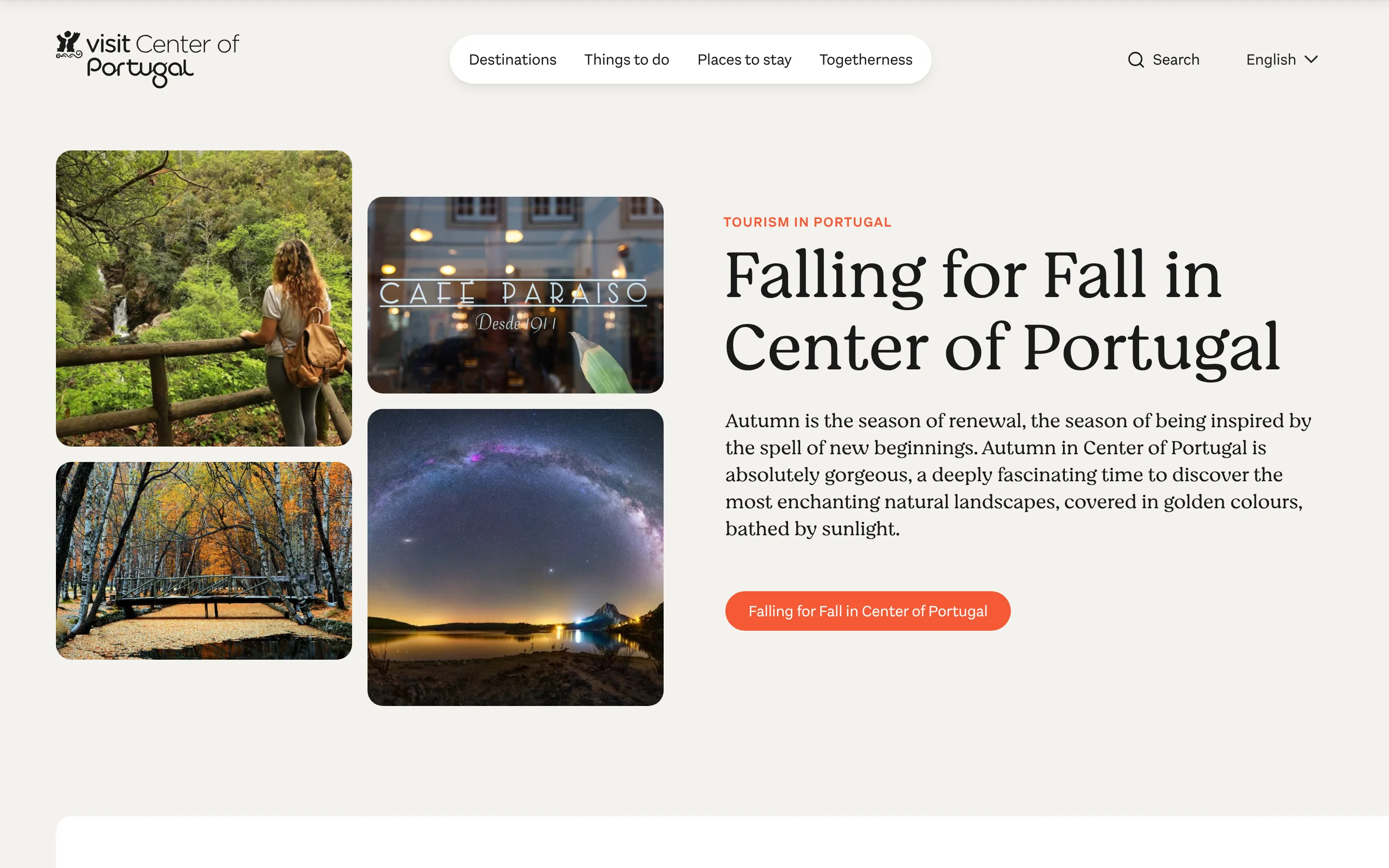
Center of Portugal
Five languages
Asked for: An easier way to run their website, in several languages.
2,000+ articles in five languages, designed and built as one system, run by the client's own team.
5languages, one system
Two languages or five
Most multilingual sites fail quietly: one language falls behind, a page exists in English but not in German, the menu is translated and the PDFs aren't, and the team stops trusting the site. The fix isn't more translation. It's a structure that makes it hard to fall behind.
I'm Frederico Leonardo, a senior web developer in Lisbon, Portugal. I've designed and built sites in five languages with 2,000+ articles, two-language institutional sites, and moved multilingual sites between platforms. I work in English and Portuguese, which helps: I've been the editor on the other side of the CMS.
More about me01
Not everything needs every language. We decide what is translated, what is shared and what stays in one language, before building.
02
In Craft CMS: sites and propagation rules, so a new article exists in every language it should, with the right fallbacks. In Webflow: Localization, when the site is small enough for it.
03
Who translates, how missing translations are flagged, what visitors see while a translation is pending.
04
One URL per language, correct alternates, sitemaps per language, so each market finds its own version.
05
German is a third longer than English. Portuguese wraps differently. The layouts are tested with real translated content, not with lorem ipsum.
| Craft CMS | Webflow | |
|---|---|---|
| Best for | 3+ languages, lots of content, editors who translate every week | 2 to 3 languages, marketing site, simple content model |
| Cost | Licence, no per-language pricing | Localization is priced per language and grows with CMS items |
| Workflow | Propagation, fallbacks, per-field translation | Per-locale overrides in the Designer |
| Watch out for | Needs a developer to set up properly | Cost at scale, thinner editorial workflow |
Craft CMS
Webflow
Proof
Center of Portugal
Five languages
Asked for: An easier way to run their website, in several languages.
5languages, one system
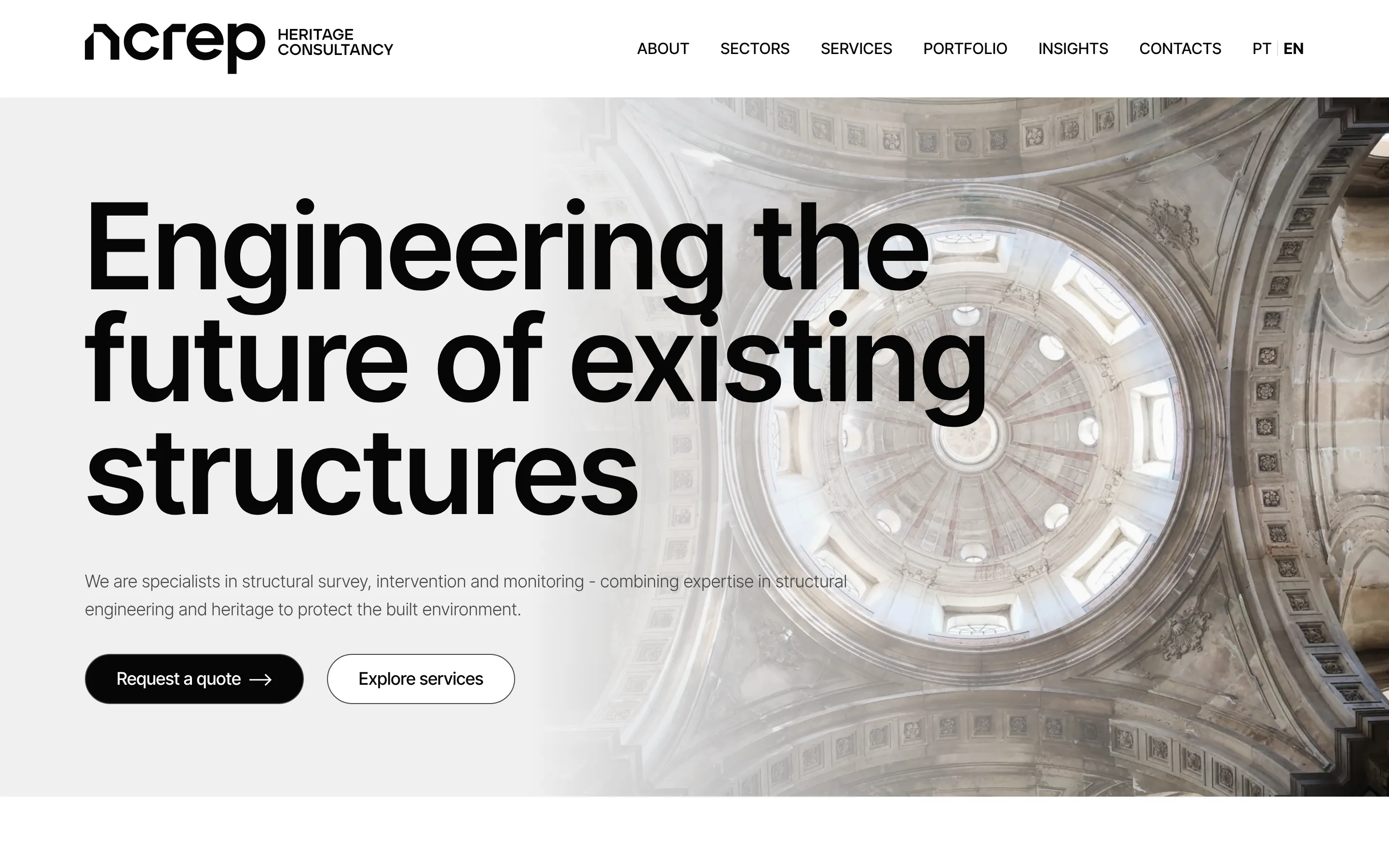
NCREP
Two sites, one CMS
Asked for: Major's designs, built as designed.
2sites from one platform
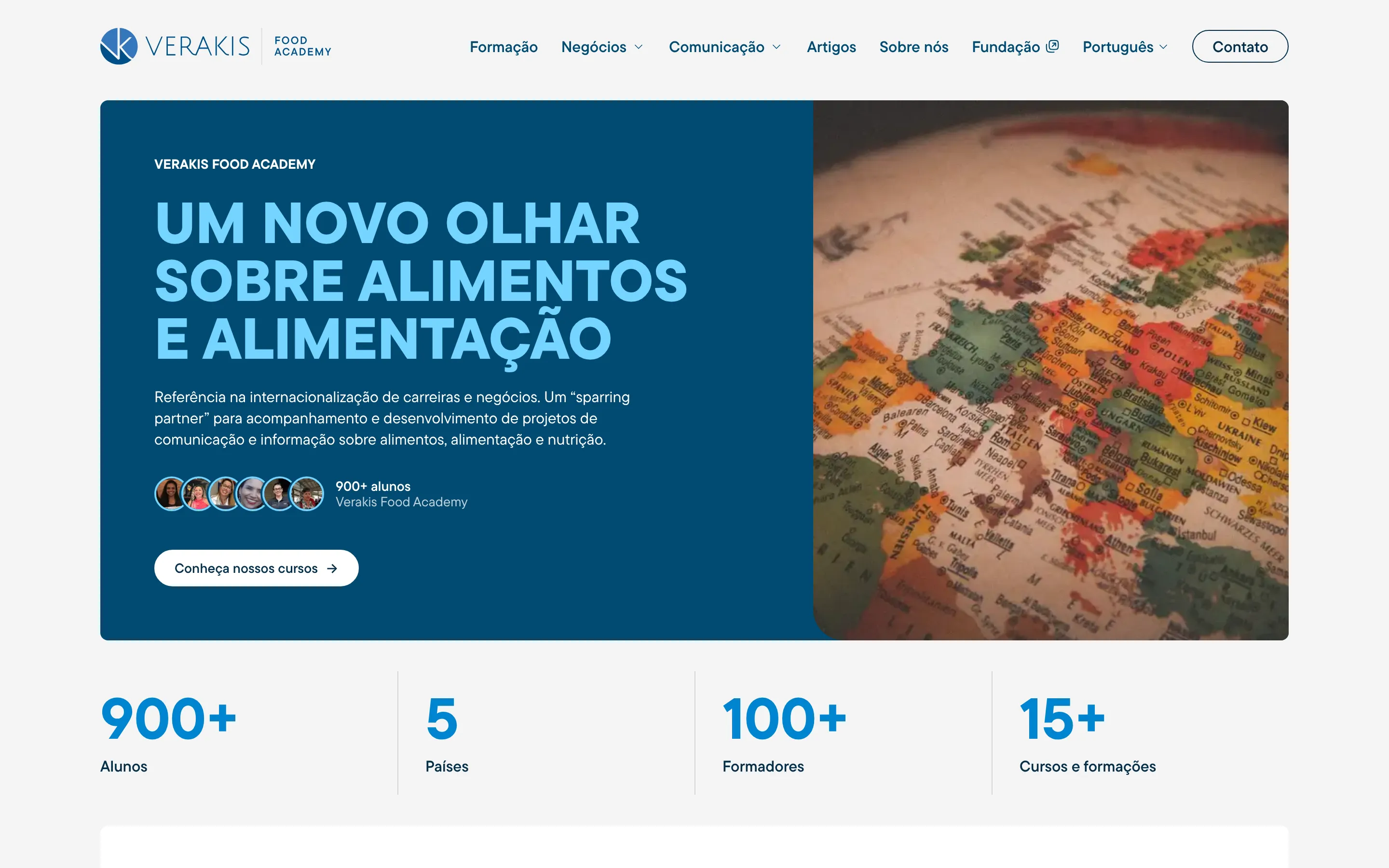
Verakis Food Academy
No per-language fees
Asked for: Lower running costs for their Webflow site.
~50%lower monthly costs
Frederico is a kind of haute couture tailor for the digital age. His rigour, knowledge and refined aesthetic sense are always in service of a clear, effective message. Our goal is to position Center of Portugal in international markets with clarity and a voice of its own. I know nothing about code, so watching him strip the noise from page after page feels almost like magic.
Languages can share the same content model and templates, and the quote still accounts for translated content, URL structure, editorial workflows, migration and testing in each language. Translation is separate: your team can provide it, or we can agree another workflow with human review. Indicative project budgets are on the pricing page.
Pricing & ProcessI work white-label or alongside your agency, from the pitch to long after launch. You keep the client and I answer for the technical side. At handover, the code goes to your client.
How I work with agenciesFAQ
Yes, if the site was built for it. That's the point of doing the content model first.
No. The translations come from your team, or we use AI and your team reviews it. I set up the structure and the workflow so either way works inside the CMS.
Craft CMS handles them. The design has to be planned for it. Tell me early.
That's what hreflang, per-language URLs and sitemaps are for. It's part of every multilingual build.
Yes. See CMS migration.
Next step
Send the context and I'll reply, usually within one working day, with a few questions.
Schedule a free 30-minute call